New Doors · Toronto
Commercial Rolling Door Repair in Toronto
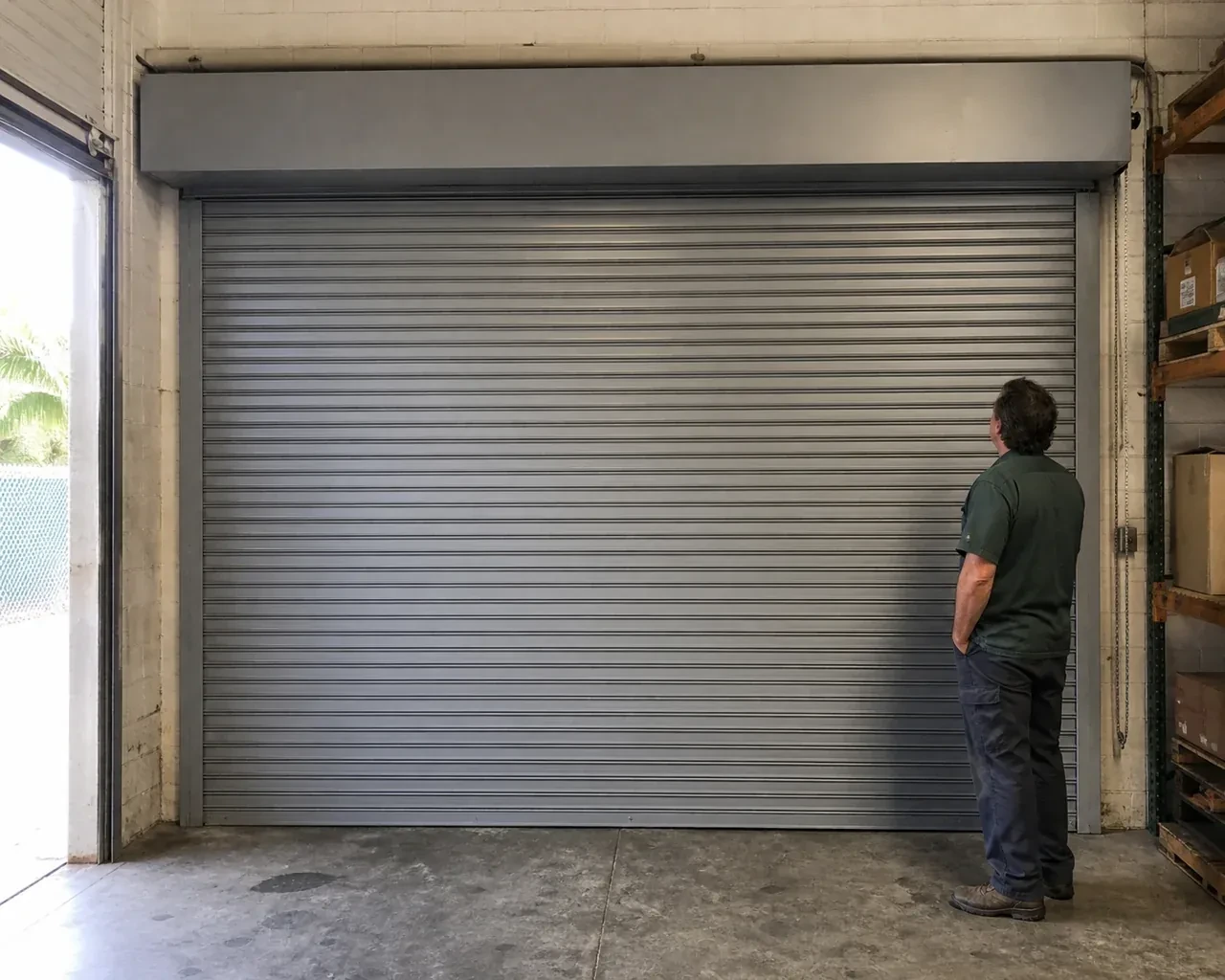
The hand chain takes far more effort than it did last month. The curtain feels heavy from the first pull, pauses around mid-travel, and settles downward instead of holding a steady position.
Commercial Rolling Door Repair
In plain words
Impact damage often looks local but changes the path of the entire curtain. A bowed bottom bar can spread a guide, a bent slat can pull endlocks sideways, and a struck jamb can alter the opening width. Repair begins with measurements at the guides and brackets as well as a close look at the damaged section. Serviceable slats or curtain sections can be renewed, guides realigned and fasteners restored using components that match the identified assembly. The final check watches the repaired area enter the coil, pass through both guides and meet the sill evenly.
How the visit goesThe rolling door starts upward, then one side rises ahead of the other. Its bottom bar sits on an angle, several slats scrape the guide, and the opening is no longer clear enough for normal shipping traffic.
Toronto
How the visit goes
Read the curtain from bottom to coil
The curtain reveals how the door has been travelling. The bottom bar is checked for level, twist, impact marks and even contact with the sill. Moving upward, the inspection follows interlocking slats or sheet material, endlocks and windlocks for dents, separation, missing fasteners, polished rub marks or sideways shift. At the hood, the technician observes how the material enters the coil and whether it stacks evenly on the barrel. These clues show whether a damaged section can be renewed locally or whether distortion has spread far enough to affect guides, brackets and counterbalance.
Cycle, observe and document the result
The repaired door is returned to service through a measured test sequence. Initial movement is slow and closely observed at the guides, coil, bottom bar, brackets and drive. Several full cycles follow, using the normal control and the manual method where applicable, while the technician listens for repeatable noise and checks stopping positions. Locks, interlocks and protective devices are tested at their proper stage. The handover record identifies parts changed, settings established, functional checks completed and any connected condition assigned to another scope, giving facility staff a practical baseline for future inspections.
Documentation for a labelled fire door
When the assembly carries a fire-protection label, the customer receives a record that keeps ordinary operation and fire-door responsibilities connected but distinct. It identifies relevant labels, compatible repaired parts, closing-path observations and the inspection or test activity included in the authorised scope. Any release-system, alarm-interface or building-fire-plan item assigned elsewhere is named clearly. The facility can retain this with its fire-safety records and continue the inspection schedule required for closures in fire separations. Guides and the doorway remain free of storage so the door can follow its intended closing path.
Commercial Rolling Door Repair
In the van
- Operator brake and limits
- Bottom bar and astragal
- Windlocks and curtain fasteners
- Barrel and headplate brackets
- Guides and bellmouths
What affects the quote
Same fees day, night or weekend
1Guide and jamb condition
The quote reflects guide straightening or replacement, wall-angle fasteners and measured alignment. Moved masonry, steel framing or a struck jamb can add separately responsible building work.
2Electrical and structural coordination
Supply faults, building wiring, damaged framing or uncertain anchors may involve another responsible trade or professional. The rolling-door quote separates that coordination from authorised door-system tasks.
3Bottom bar and sealing needs
A twisted bottom bar, torn astragal, worn retainer, sensing edge and misaligned slide bolts are distinct items. Floor slope and threshold condition also influence the closure-line work.
Commercial Rolling Door Repair: questions
Can the closing limit be adjusted to stop a floor gap?
Limit adjustment is appropriate when the curtain, bottom bar and guides are aligned and the seal simply stops at the wrong point. A sloped sill, twisted bar, hardened astragal or shifted curtain needs its own correction first. Setting extra downward travel against a mechanical problem can compress the seal and load the operator without producing even contact.
What can facility staff check between service visits?
Staff can observe bottom-bar level, new dents or rub marks, guide debris, loose visible fasteners, torn seals, sensor cleanliness, unusual sounds and changes in operating effort. They can keep the sill and doorway clear and record impacts. Spring tension, bracket release and internal repairs remain controlled technician tasks because those areas involve curtain weight and stored energy.
Can individual bent slats be replaced?
Many interlocking steel curtains allow a damaged group of slats to be removed and renewed with compatible pieces. The technician also checks neighbouring joints, endlocks, guides and the coil because an impact can spread force beyond the visible dent. Curtain material, profile, gauge, finish and fire-rating status all influence whether sectional repair is suitable.
Installation & Upgrades
- Insulated Steel Garage Door InstallationThe existing door opens on old tracks that crowd storage near the ceiling.
- Wind-Rated Garage Door ReplacementA recent wind event left one section slightly creased, a strut twisted, and several track fasteners…
- Carriage-House Garage Door InstallationTwo garage openings sit side by side, and small differences in window spacing or decorative…
Commercial Rolling Door Repair near you
The garage door services we bring to Toronto fall into four groups: repair and maintenance for doors that are sticking or noisy; springs and lifting hardware; openers, remotes and access; and new door installation or upgrade for homes and businesses that are ready for a change.